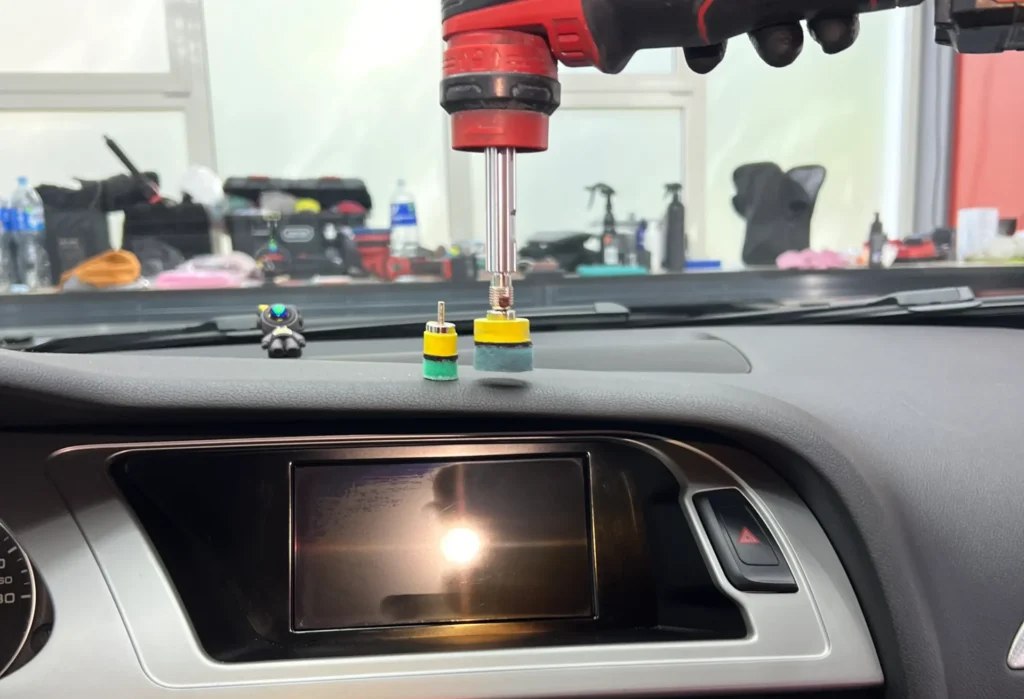

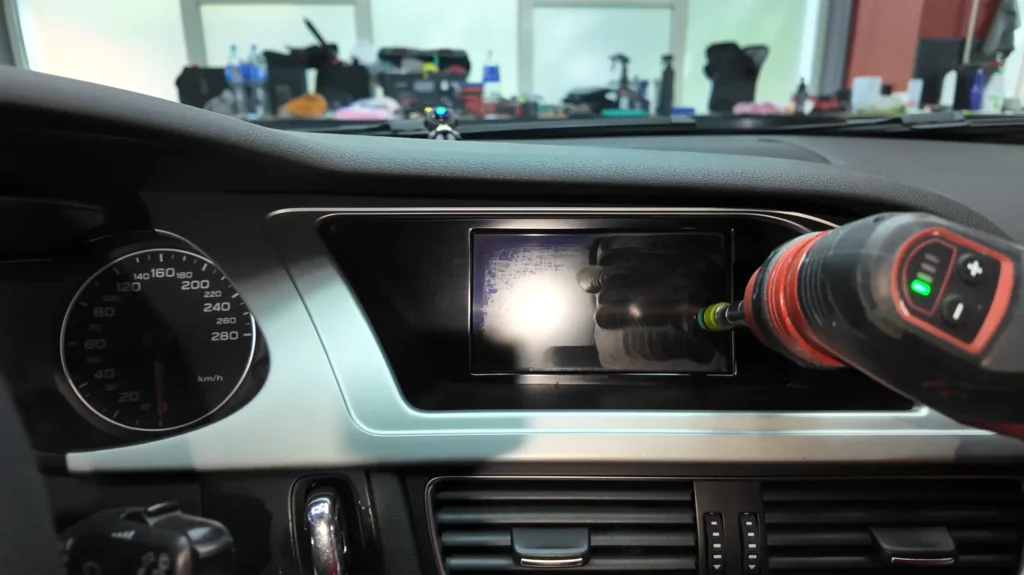
Most automotive LCD screens are coated with a special surface layer known as anti-glare (matte) or anti-reflectivecoating. This is not a physical film applied to the surface, but a factory-applied chemical coating directly bonded to the glass.
This layer serves several important functions:
- reduces light reflections;
- improves screen visibility in sunlight;
- gives the display a matte, non-glossy appearance;
- helps reduce eye strain caused by glare.
Why Does This Layer Get Damaged?
Due to its structure, this coating is softer than the glass itself. Over time, it can easily become scratched, worn, or damaged by:
- keys;
- smartphones;
- small everyday objects;
- improper chemicals or even unsuitable cleaning cloths used on LCD screens.
Visually, the screen may appear scratched, although in reality the glass itself is not damaged—only the surface matte coating is affected. As a result, the vehicle’s interior loses its aesthetic appeal, and the screen looks worn even when the car itself is in excellent condition.
How Does LCD Screen Polishing Work?
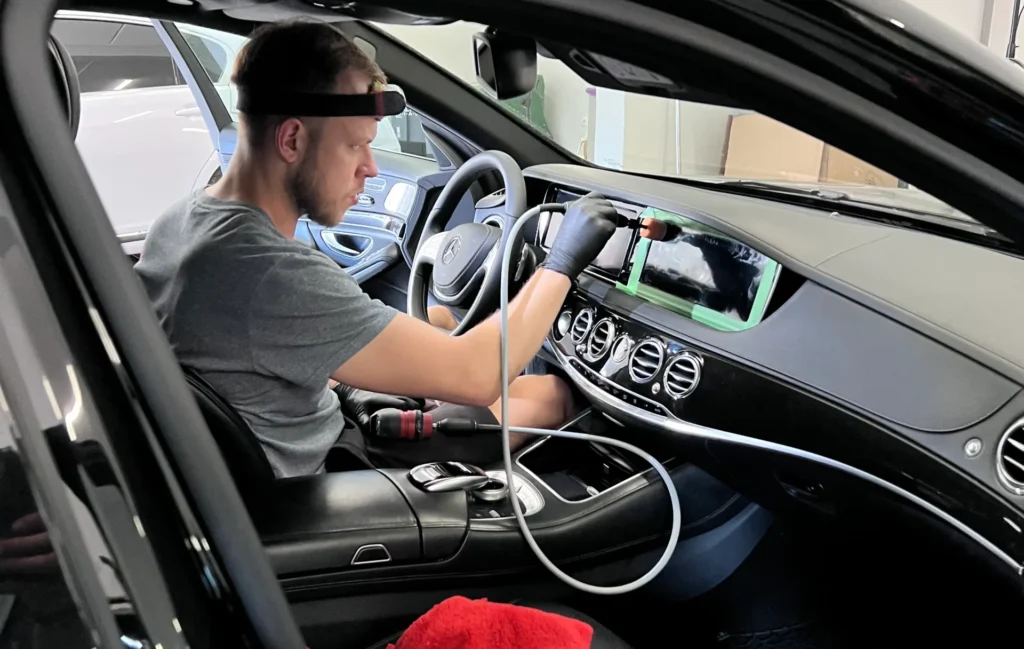
LCD screen polishing is a process in which the damaged surface layer is fully or carefully removed, revealing a clean, clear glass surface underneath.
This allows us to:
- eliminate visible wear and scratches;
- restore clean interior look
- improve image clarity and sharpness.
The matte LCD monitor coating layer is like a film. Using the correct tools and techniques makes its possible to remove it safely without damaging the screen structure.
What Tools Are Used?
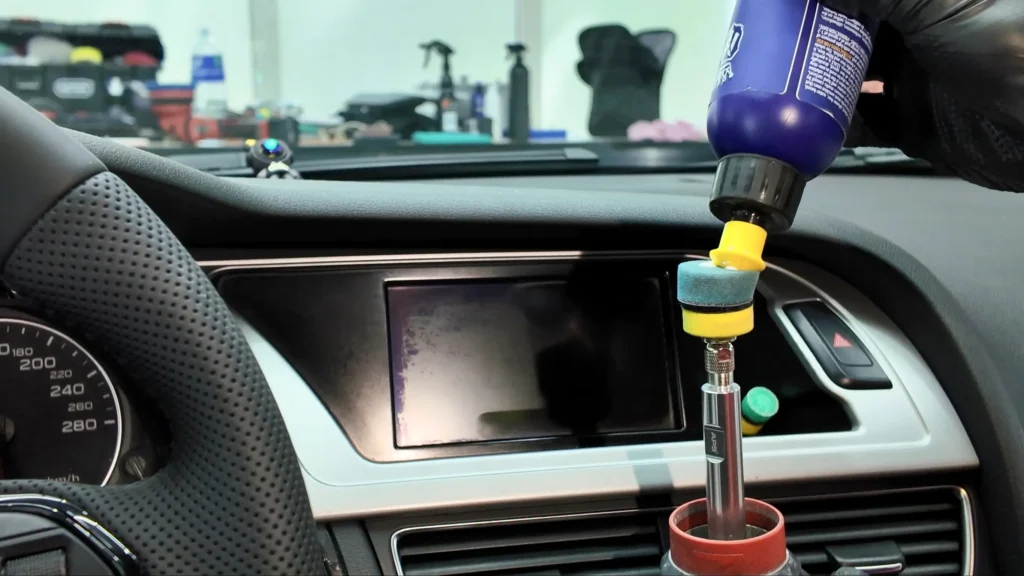
The polishing process involves high-precision tools, including:
- mini polishing machines (including flexible shaft versions);
- very small polishing pads – 10 mm, 15 mm, 25 mm, 35 mm, and cone-shaped pads;
- fine abrasive polishing compounds;
- finishing polishes to achieve a mirror-like gloss.
Small pads allows precise work in corners. Cover sensitive surfaces with medium stickness masking tape to void damaging other interior components. It is crucial to work carefully, controlling pressure and temperature to avoid overheating the screen or damaging the pixel layer.
After the Damaged Layer Is Removed:
- the screen becomes glossy and transparent;
- visible wear marks and stains disappear;
- the image appears sharper and more contrast-rich.
Although the screen loses its factory matte finish, it visually looks clean, refined, and aesthetically pleasing. For many clients, this result is far preferable then cratched or stained surface.
Why Choose Polishing Instead of Replacement?
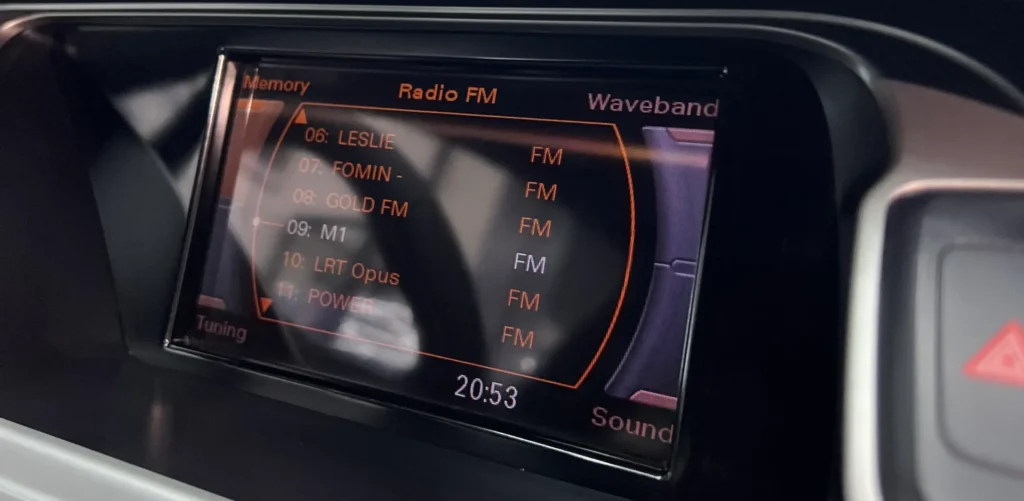
Replacing an LCD screen is often an expensive and complex process involving disassembly, programming, or even replacement of the entire multimedia system. In contrast, polishing:
- costs significantly less;
- is completed much faster;
- poses no risk to electronics;
- preserves the vehicle’s original equipment.
It is an effective solution for those who want to restore interior aesthetics without major investment.
Summary
The matte surface coating on LCD screens is beneficial but inevitably wears over time. When it becomes scratched or damaged, polishing allows the remove the defective coating and restores a clean, aesthetic look.
This visual refresh lets you enjoy a tidy, modern interior without the need to replace expensive components.