

A self-service car wash today is a very convenient place for quick and efficient vehicle washing, especially if you don’t have proper equipment or wastewater drainage in your own workshop.
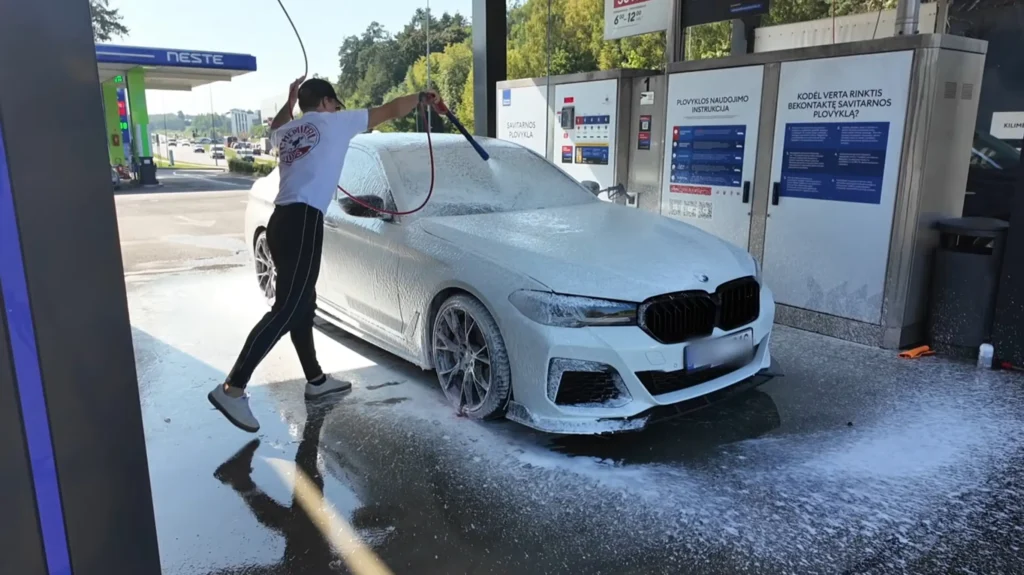
For a relatively small amount of money, we can perform both a simple routine wash and a more serious preparation before polishing.
A good result depends on the correct sequence and the chemicals used.
1. Pre-wash
If the vehicle is very dirty, it is worth bringing a stronger pre-wash dirt remover. It will help effectively loosen road grime, insect residues, and heavy dirt.
Spray it on a rinsed or slightly wet surface. Leave the pre-wash to dwell for a few minutes, but do not allow it to dry. Rinse the dirt remover thoroughly, paying attention to the inner arches, side skirts, and the rear of the vehicle. These areas usually accumulate the most dirt.
When using a dirt remover, it is very important to pay attention to its concentration. A mixture that is too strong may damage chrome-plated parts.
2. Active Foam, Contact Wash
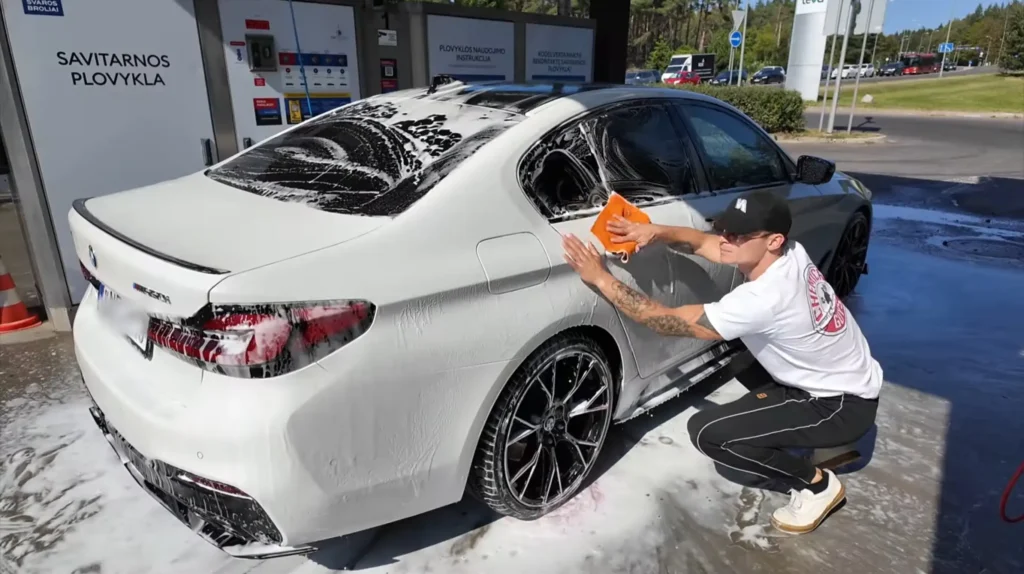
If you do not have a dirt remover (pre-wash) and the vehicle is not heavily dirty, active foam may be enough. It also helps soften the dirt.
Apply the foam evenly and allow it to dwell for a few minutes (do not let it dry). Rinse using the distilled water program and dry the vehicle to make sure the bodywork is clean.
To remove more stubborn dirt, high pressure may not be enough. In this case, the dirt can be loosened with a sponge or microfiber wash mitt. Active foam works well for this stage because it provides lubrication and allows dirt to be removed more easily.
After this stage – perform a final rinse. Use the demineralized or distilled water program to reduce the risk of water spot marks.
3. Decontamination
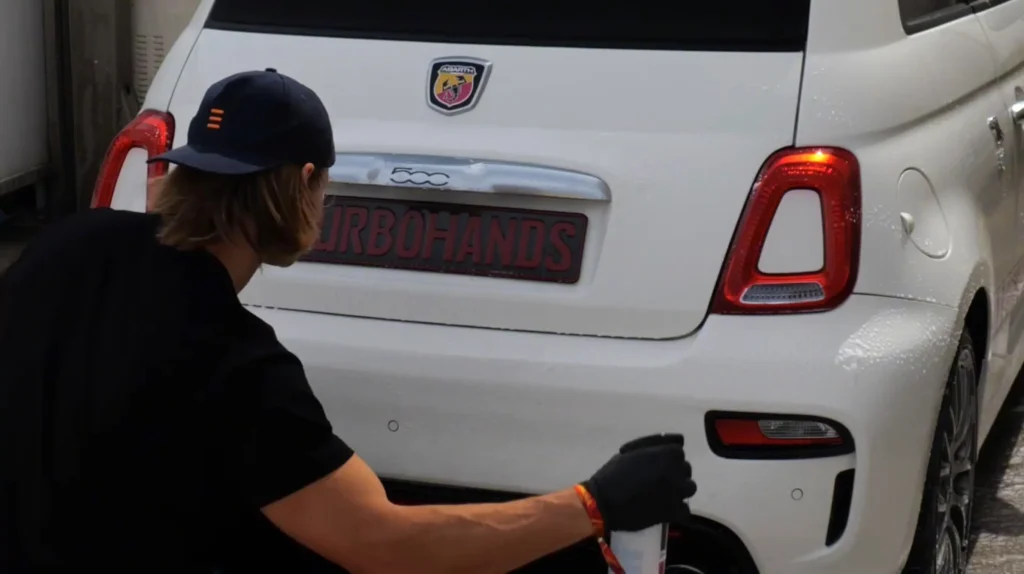
If the vehicle is being prepared for polishing, both chemical and mechanical decontamination are required.
Chemical decontamination removes:
- Metal particle deposits (brake dust);
- Tar and bitumen;
- Other road contaminants.
Mechanical Decontamination
After chemical decontamination, the surface often still contains bonded contaminants. In this case, a clay bar is used.
It:
- Removes remaining contaminants (metal particles, tar residues);
- Prepares the paint for polishing.
It is important to use a proper lubricant and work gently.
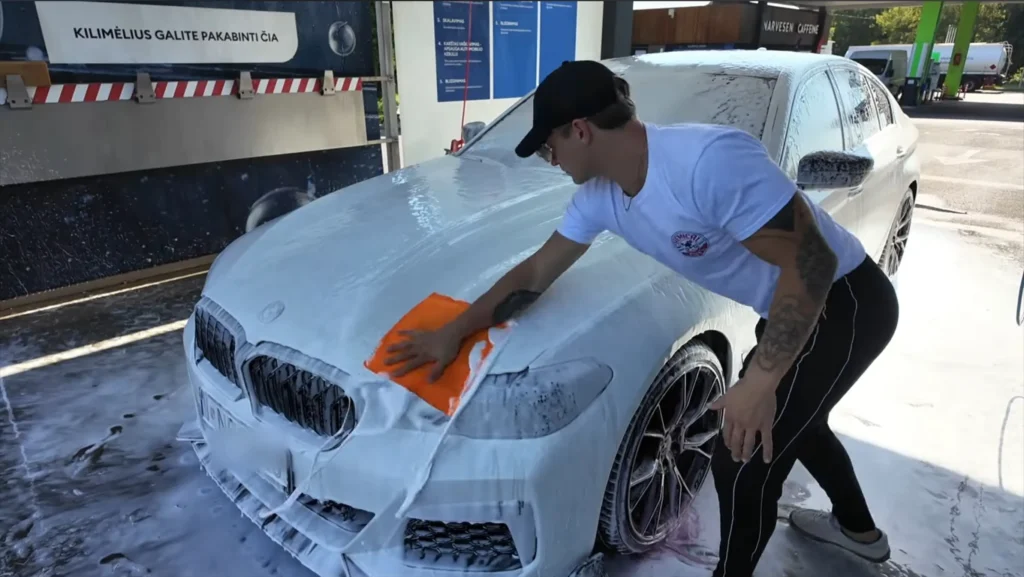
There is also a special decontamination mitt designed for removing these contaminants. With it can be slightly faster to work with and reduces the risk of dropping the clay bar.
After this very important washing stage, the vehicle is ready for polishing. This helps polishing pads stay clean for longer and produces better results. Dirt trapped in the pads can additionally scratch the paint and leave unnecessary holograms (micro-scratches).
Summary:
At a self-service car wash, we can quickly and effectively wash a vehicle for just a few euros, especially if you don’t have the conditions to do it at your workplace.
The most important things are understanding the process and choosing the right chemicals.
High water pressure, pre wash and active foam help remove dirt from the bodywork more efficiently.
After performing decontamination, the final result improves and the surface becomes properly prepared for polishing.
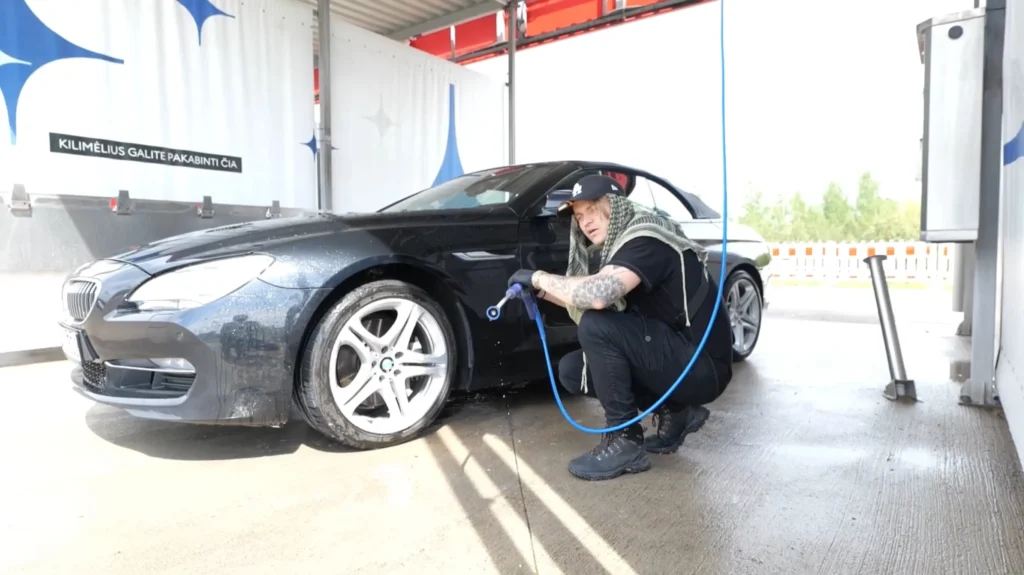
Maximum results are achieved by following the correct sequence:
- Pre – wash;
- Contact wash;
- Chemical decontamination;
- Clay bar treatment, if necessary.