

Car polishing is not just about adding gloss — it is actual clear coat correction. When done properly, polishing removes scratches, oxidation, and swirl marks. However, incorrect methods can permanently damage the clear coat layer. That’s why understanding paint structure and choosing a safe polishing combination is essential.
Paint System Structure
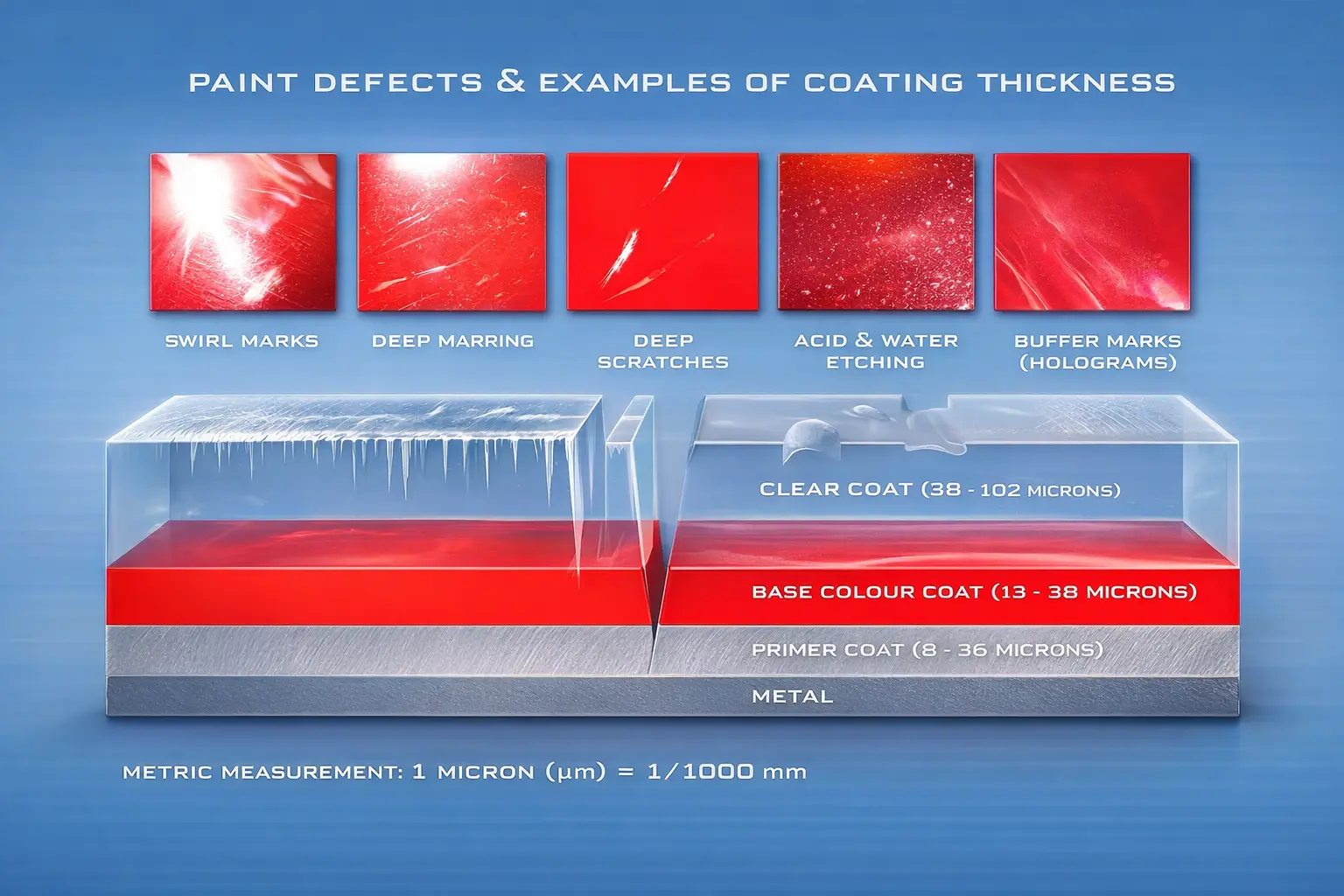
A painted vehicle surface consists of several layers:
- Primer;
- Base coat (color layer);
- Clear coat (transparent protective layer)
All polishing work is performed on the clear coat. Every polishing process physically removes a very thin portion of that layer.
What Is Clear Coat and What Is Its Purpose?
The clear coat is the transparent top layer of the paint system. Its main purpose is to protect the colored base coat from environmental damage.
It protects against:
- UV rays (which causes fading);
- Oxidation
In addition to protection, the clear coat provides gloss, depth, and surface clarity — meaning the vehicle’s visual appearance depends entirely on its condition.
All polishing and correction procedures are performed on this layer.
Why a Vehicle Should Not Be Polished Too Frequently
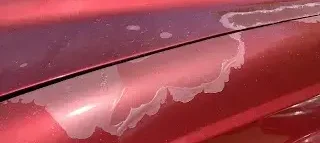
It is critical to understand:
- Every polishing session reduces clear coat thickness;
- The more times a vehicle has been polished, the less clear coat remains;
- Excessive or aggressive polishing can lead to clear coat failure (burn-through to the base coat or even primer), which is serious and often requires repainting
Before polishing, you must assess:
- Has the vehicle been polished before?;
- How many times?;
- Is the vehicle original paint or repainted?
Paint Thickness Gauge – Essential for Safe Correction
Professional polishing always begins with measuring paint thickness. A paint thickness gauge measures the total film build (primer + base coat + clear coat) in microns (µm).
Typical readings:
- Factory paint: approximately 60–120 µm;
- Repainted panels: typically 120–200+ µm;
- Over 200 µm may indicate filler work or major repair
If readings are low, clear coat reserves are limited, and a less aggressive polishing approach must be chosen.
Polishing vs. Paint Correction – Not the Same
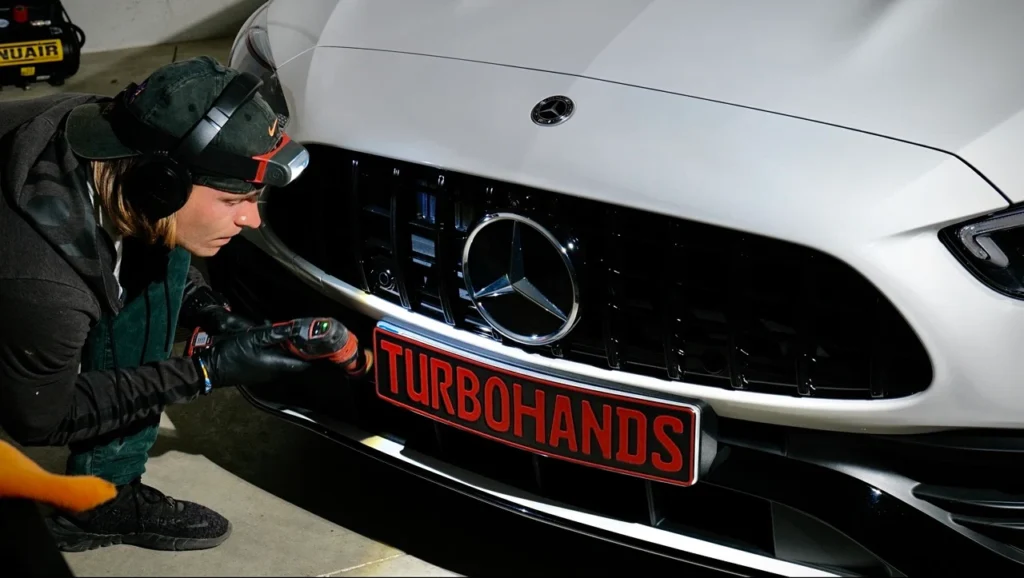
Although in everyday language these terms are often used as synonyms, polishing and paint correction are not the same thing.
Polishing usually means restoring shine and removing light scratches. It can be a gentle one-step, focused on achieving an aesthetic result.
Meanwhile, paint correction is a more in-depth process aimed to:
- Removing deeper scratches;
- Correcting paint defects (runs, dust nibs, texture, sanding marks)
In simple terms:
- Polishing = cosmetic enhancement;
- Paint correction = defects removal + polishing
Both processes remove clear coat, but they differ in intensity, purpose, and risk level.
The Polishing Combination: Pad + Compound
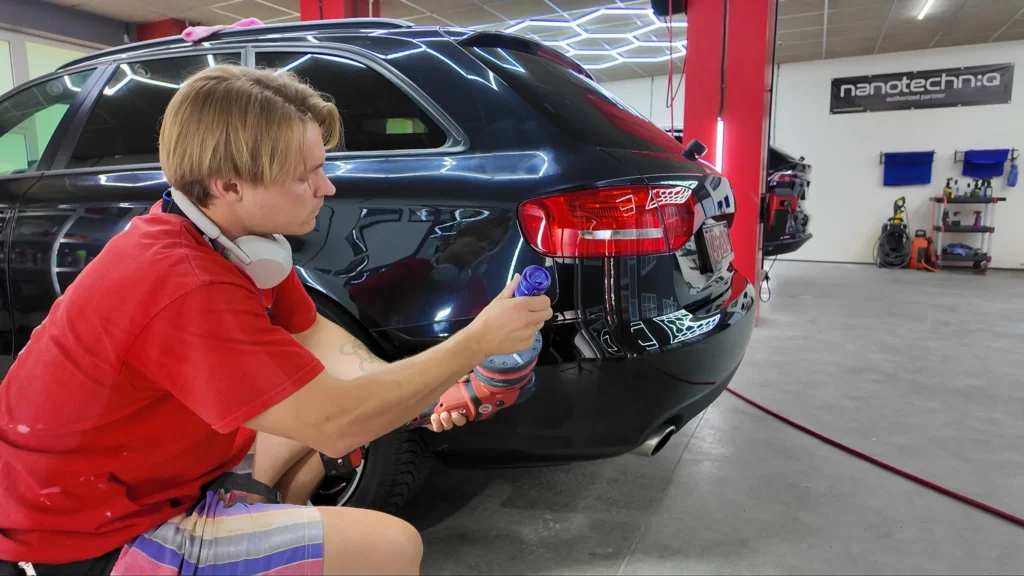
The final result depends heavily on the polishing combination, which includes:
- Pad aggressiveness;
- Compound aggressiveness
More aggressive setup may be used when:
- The vehicle is new.
- The vehicle has not been polished before.
- The panel has been repainted, and the thickness readings are high
In such cases, you may use:
- A wool pad or hard-cut pad;
- A heavy-cut compound
This allows faster and more effective removal of deeper defects.
Choose a less aggressive combination when:
- The vehicle has been polished multiple times;
- Thickness readings indicate limited clear coat remaining
In this situation:
- Use a medium or soft foam pad;
- Use a medium polish
This combination removes the majority of visible defects safely.
Communication Is Part of Professionalism
If thickness readings show limited clear coat, it is essential to:
- Explain that for safety reasons not all deep defects can be removed. if there is a opportunity repair them separately
- Offer a safe polishing option that improves appearance without compromising paint integrity
Summary
- The clear coat is the protective layer of the paint system;
- Polishing and paint correction are different processes with different intensity levels;
- Every polishing session reduces clear coat thickness — correction cannot be done indefinitely;
- A paint thickness gauge is essential for safe, professional work;
- Pad and compound selection must be based on real measurements and surface condition;
- Safe polishing is not about maximum aggression — it’s about achieving optimal results without risking paint failure