
In this article, I’ll explain in a simple way:
- what pad sizes are commonly used,
- how pad mounting works,
- why cooling is important,
- and how to choose a pad based on the type of scratches.
Polishing Pad Diameters – Which Ones Are Most Common?
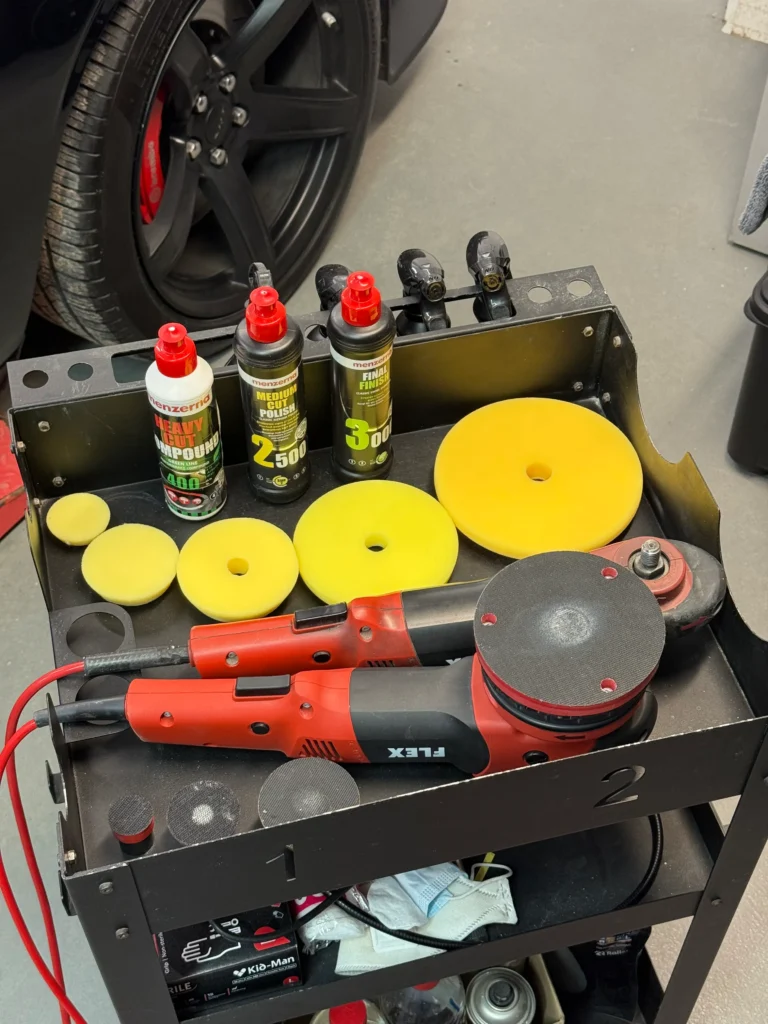
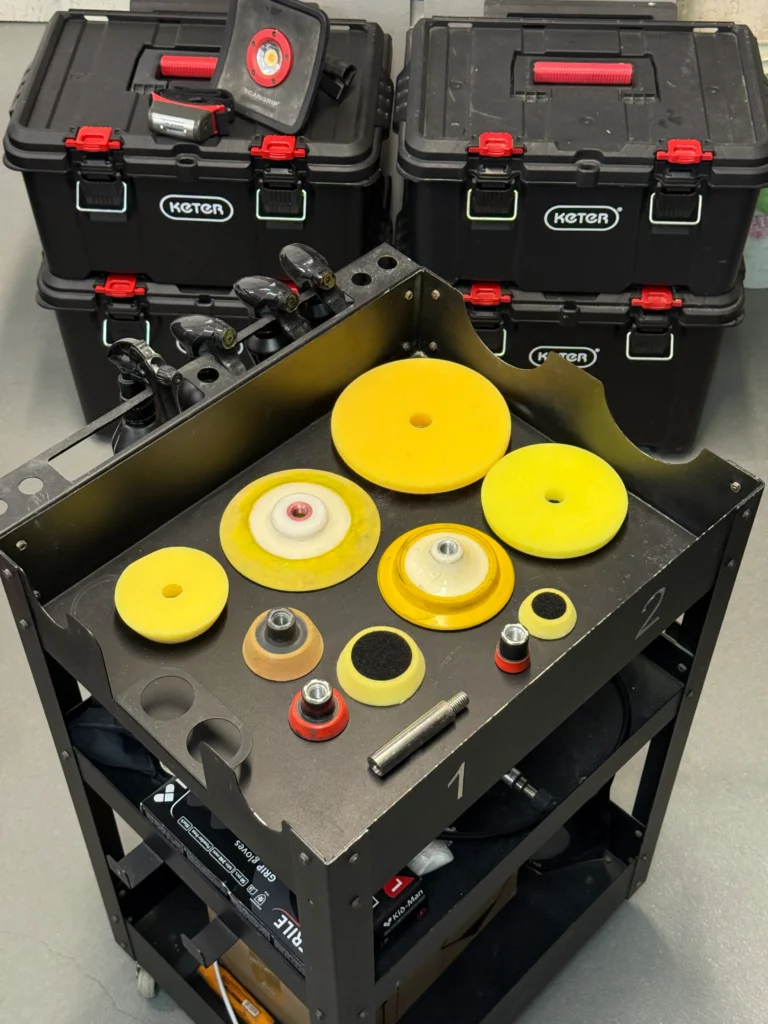
In real-world detailing, these pad and backing plate sizes are the most common:
- 10 mm
- 25 mm
- 35 mm
- 50 mm
- 75 mm
- 125 mm
- 150 mm
- 180 mm (rare)
- 200 mm (very rare)
Small pads usually range from 10 to 75 mm, while large pads go up to 180–200 mm. For everyday work, the most commonly used sizes are 75 mm, 125 mm, and 150 mm.
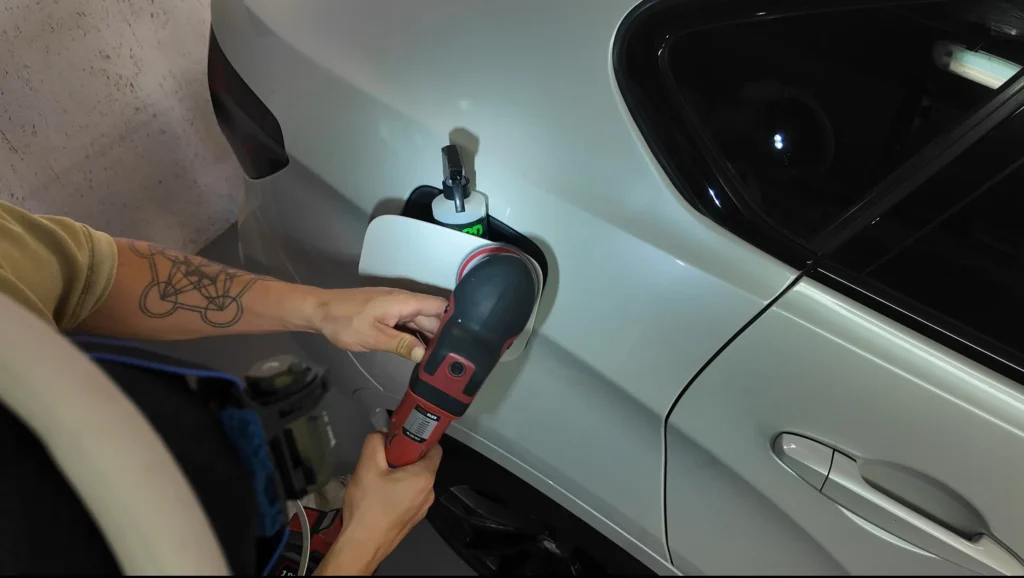
Small vs Large Pads – Where Are They Used?
(10–75 mm)
Used for:
• tight areas,
• corners,
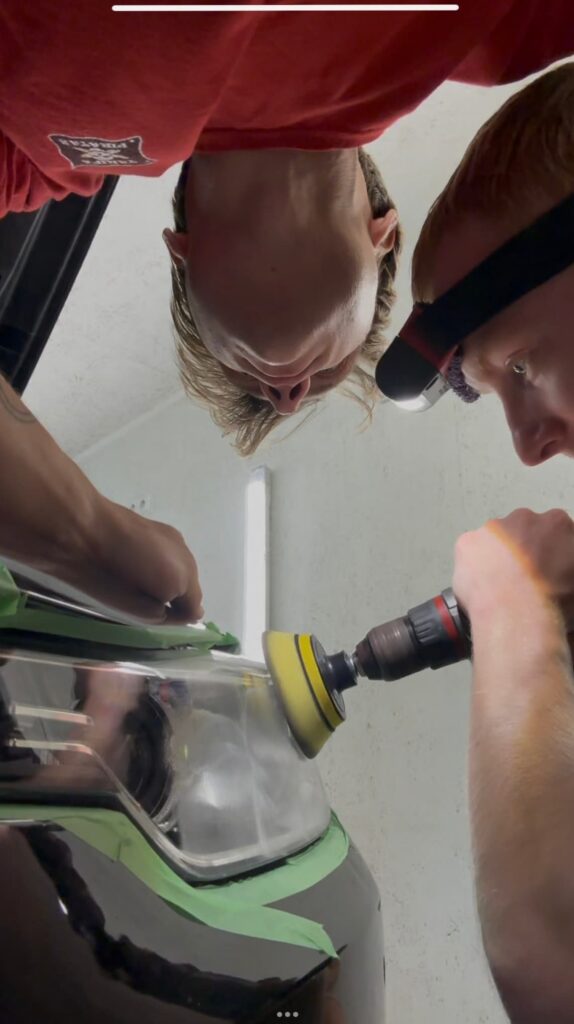
• around headlights,
• around door handles,
• wheels,
• small body panels.
They allow precise and safe work, especially in areas where a large pad won’t fit or would be risky to use.
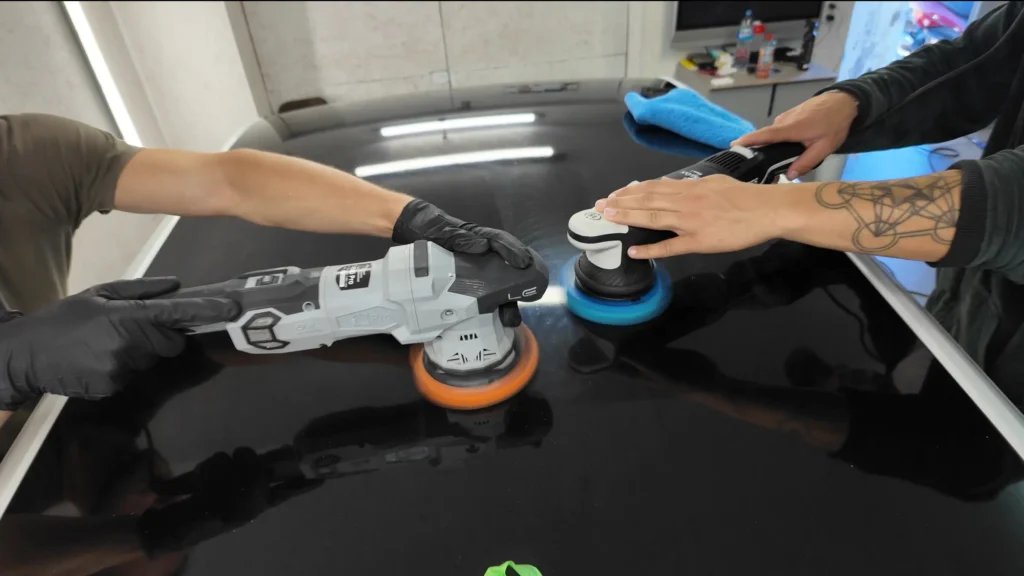
Medium and large pads (125–180 mm)
- Used for:
- doors,
- hoods,
- roofs,
- large flat panels.
They cover large areas faster, but you need to be careful around:
- sharp edges,
- paint edges,
- body lines.
Pad Hardness – Different Pads for Different Scratches
Pads don’t only differ in size, but also in hardness, which determines what kind of scratches they can remove.
- Hard pads – for heavy and medium scratches.
- Medium pads – for medium scratches, often used as all-rounders.
- Soft pads – for light scratches, holograms, and finishing.
A hologram is a cluster of very fine scratches that look like a spider web under light.
Soft pads help remove these and leave a clean, clear finish.
Backing Plates – Why They Matter So Much
Every polishing pad is attached to a backing plate, which is screwed onto the polishing machine.
It’s extremely important that:
The pad diameter matches the backing plate diameter.
If the pad is too big:
- the edges become unstable,
- control is harder,
- the risk of paint damage increases.
If the backing plate is too big:
- the pad works unevenly,
- precision is reduced.
- if plate is bigger then pad you can get caught on an edge or other part, damaging the surface
Cooling – Why Do Dual Action Backing Plates Have Holes? And why we want them.
Because a DA polisher works with the entire surface of the pad, heat builds up quickly without cooling. The holes help release heat and protect both the pad and the paint.
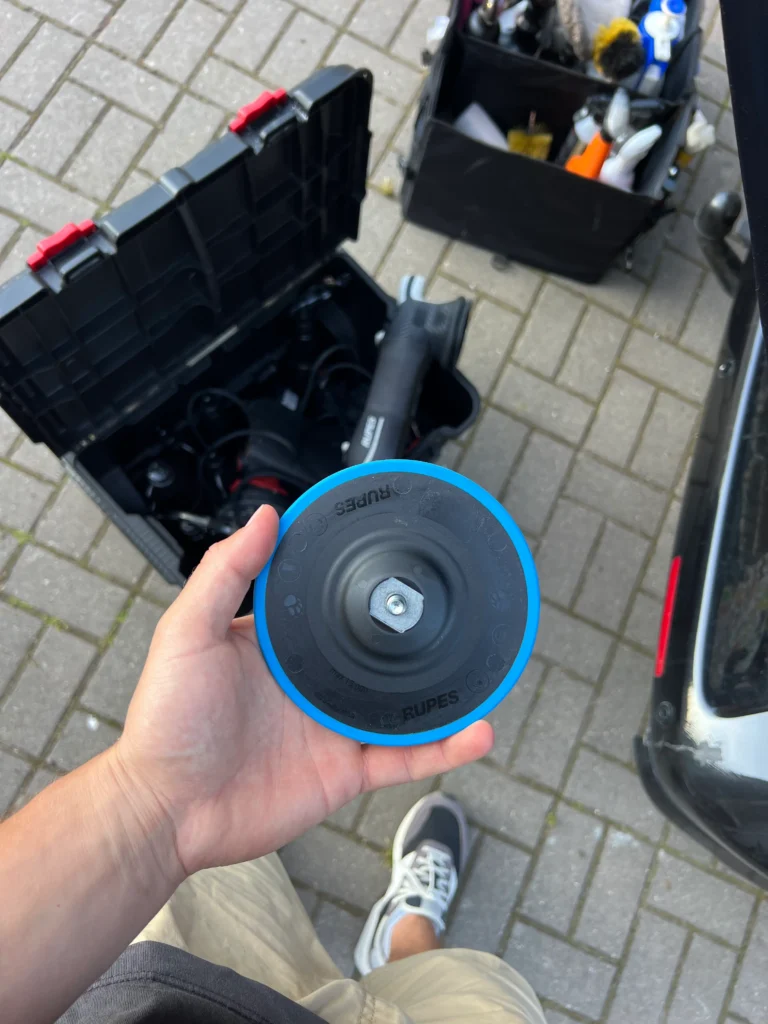
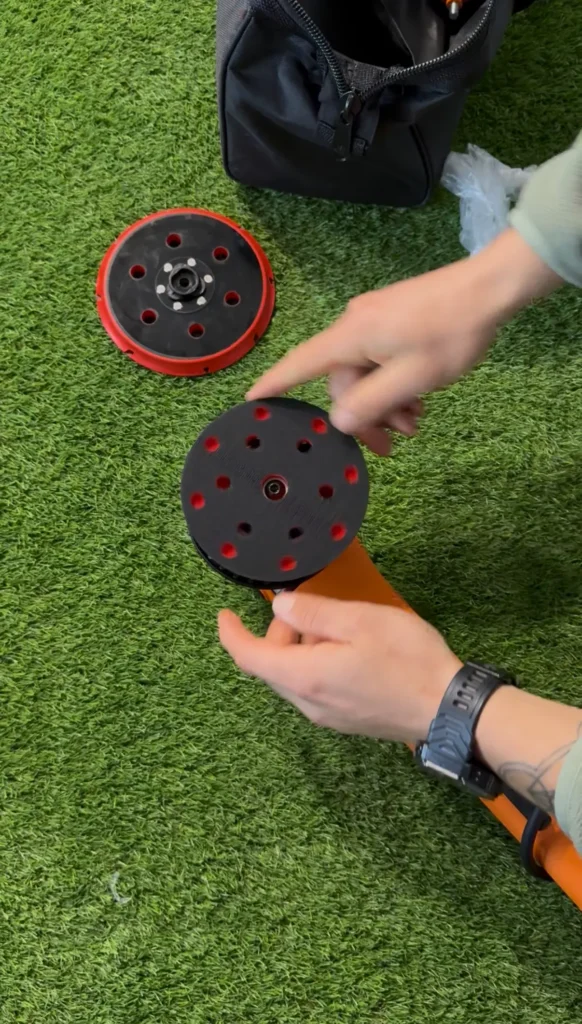
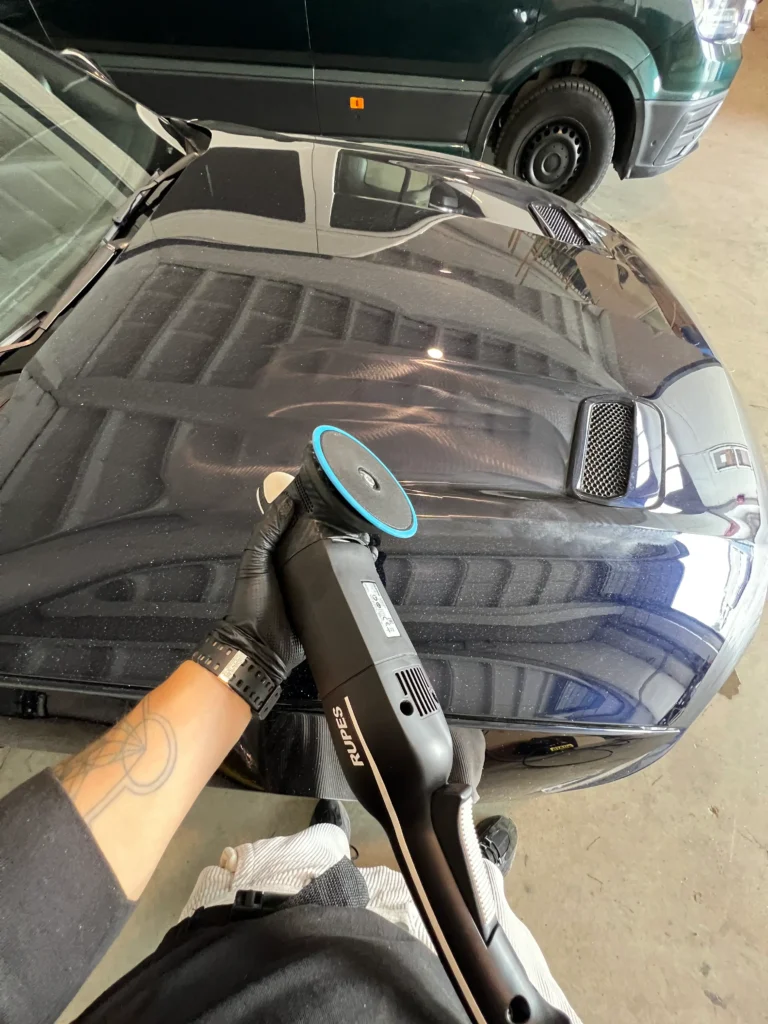
👉 Honestly – avoid DA backing plates without holes.
What happens with a non-ventilated backing plate?
🔥 It overheats
🔥 Heat softens plastic Velcro Adhesive tape who holds polishing pad.
🔥 And the foam pad can literally fly off the machine
This happened to me personally. And this is not an “accident” – it’s a design flaw.
Rotary vs Dual Action – Just Enough to Understand Pads
A rotary polisher usually works at an angle, so:
- the pad doesn’t contact the full surface,
- natural cooling happens,
- scratches can be removed faster.
However, rotary machines often leave holograms.
That’s why, in practice, a dual action polisher is often used afterward to:
- remove holograms,
- refine the finish,
- achieve a clear, streak-free surface.
Mini Pads – When Standard Pads Don’t Fit
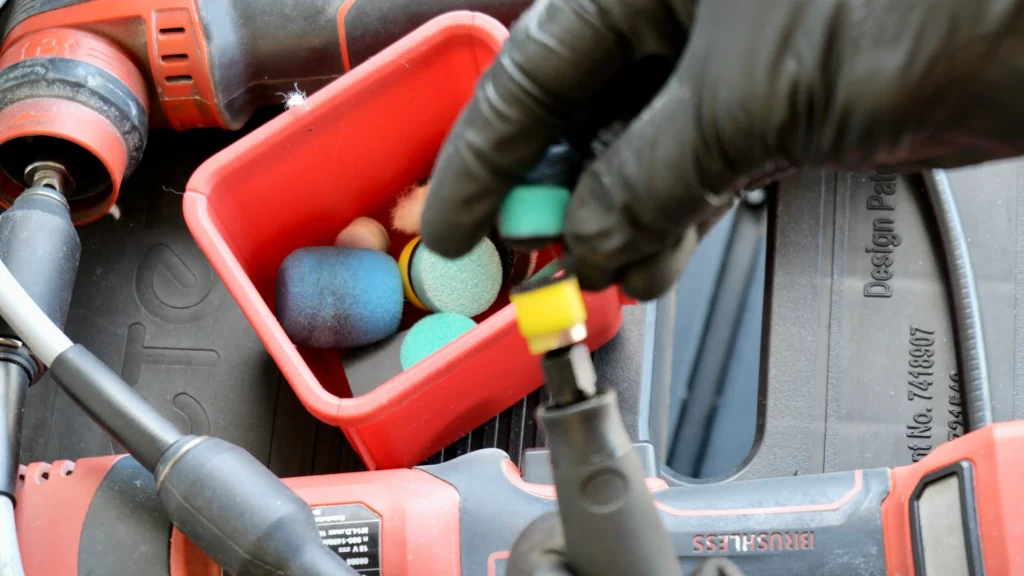
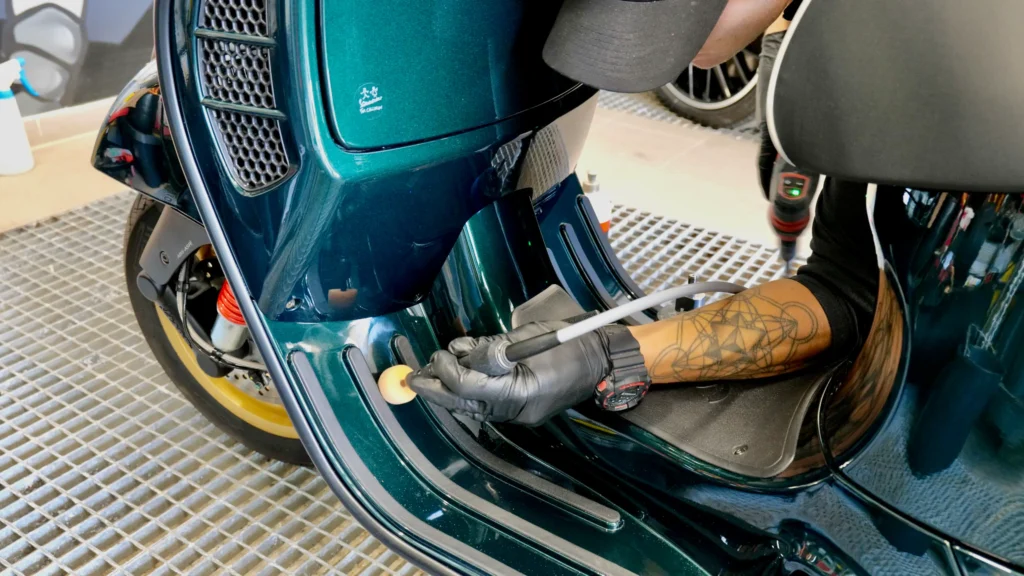
Some areas are so tight that even a 35 mm pad is too large. In those cases, detailers use:
Cone-shaped pads
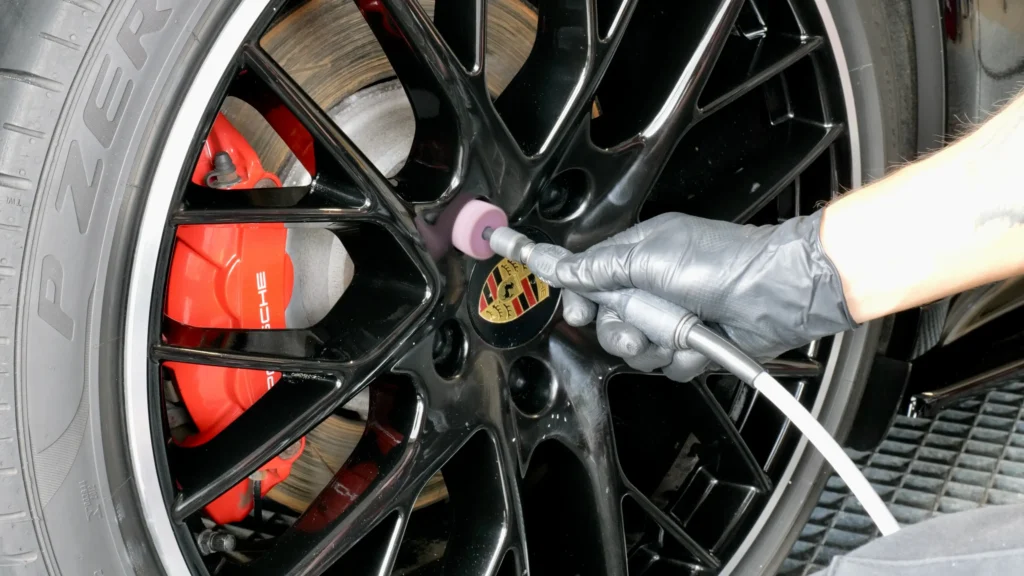
- under door handles,
- wheels,
- grilles,
- narrow gaps.
Mini pads
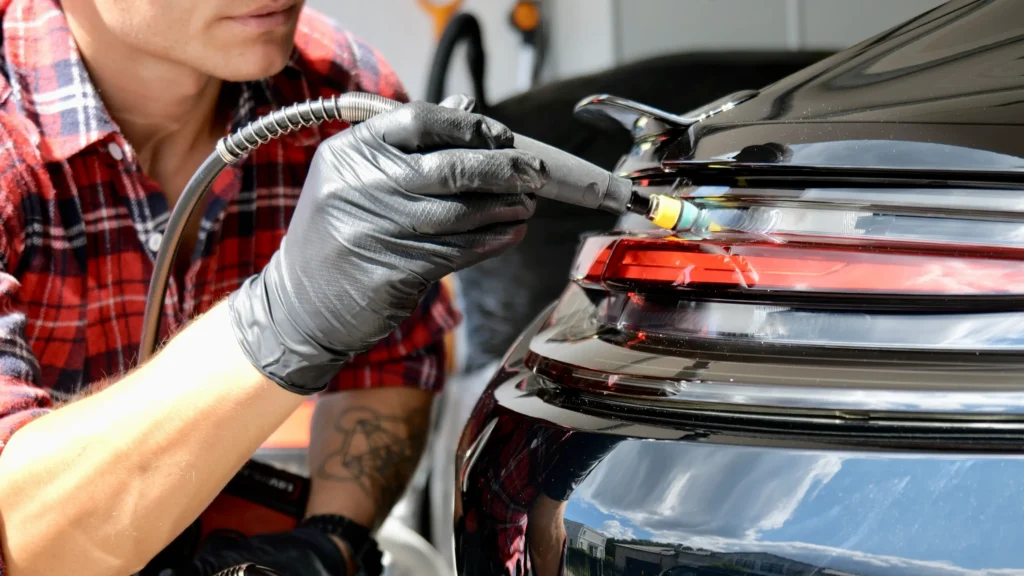
- small body parts,
- precision work,
- areas that require maximum control.
These pads can be mounted on:
- flexible shafts,
- drills,
- rotary tools,
- mini polishing systems.
This makes it possible to polish areas that would otherwise be left untouched.
Summary – Short and Clear
- Polishing pads always serve the same purpose: removing light and medium scratches.
- The most common sizes are: 35 mm, 50 mm, 75 mm, 125 mm, 150 mm.
- Every pad needs a correctly sized backing plate.
- Dual action backing plates have holes for cooling – this is essential.
- Different pad hardness levels remove different types of defects.
- Cone and mini pads allow access to hard-to-reach areas.